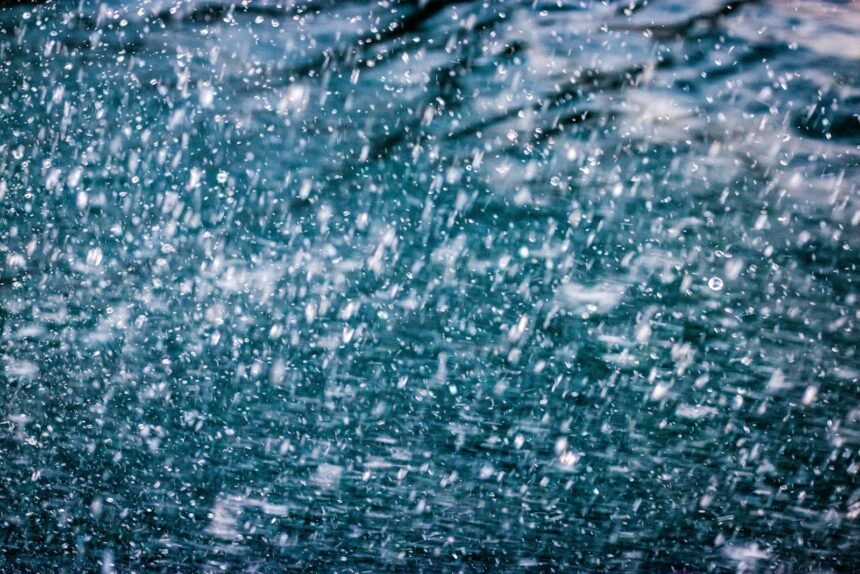

An intense atmospheric river that swept across the south coast of British Columbia has left a series of broken rainfall records across Vancouver and the Fraser Valley. The system, which delivered heavy downpours between Tuesday and Wednesday, brought more than 100 millimetres of rain to many parts of the Lower Mainland in less than a full day. While scattered showers remain, meteorologists say the worst of the event has now passed.
CityNews Meteorologist Michael Kuss says the atmospheric river weakened significantly by Thursday morning, allowing conditions to gradually settle. He noted that nearly every community from Chilliwack eastward into the mountain regions received more than 100 millimetres of precipitation within a short period. The volume of water continues to move through local watersheds and is expected to contribute to ongoing flooding throughout the day.
The Fraser Valley saw some of the most dramatic rainfall totals for Dec. 10. Abbotsford recorded 86.2 millimetres, Hope measured 134.2 millimetres, Agassiz reached 91.8 millimetres, and Chilliwack logged 110 millimetres at its airport, more than doubling the region’s previous Dec. 10 record of 52.6 millimetres set in 1896. Vancouver International Airport also set a new record with 30.9 millimetres, while White Rock registered 45 millimetres.
Beyond the record breakers, several other communities reported significant rainfall as the system moved across the region. In Metro Vancouver and Howe Sound, totals included 47 millimetres at Vancouver Harbour, 62 on Burnaby Mountain, 50 in North Delta, 63 in Pitt Meadows, 70 in Coquitlam, 67 in Surrey East, 71 in Langley, and 47 in West Vancouver. Point Atkinson saw 66 millimetres, while Squamish Airport recorded 54. The Fraser Valley experienced additional high totals such as 85 millimetres on Bradner Road, 103 in Agassiz, 125 at Cultus Lake, and 140 at Hope Airport. Vancouver Island and the Southern Gulf Islands also saw heavy rain, including 62 millimetres at Victoria University, 67 at Victoria Gonzales, and 57 on Saturna Island. Although watersheds remain saturated and localized flooding is expected to continue, meteorologists say the province has already endured the peak of this system. Kuss says the longer-term outlook offers relief, with much calmer weather expected over the next five to seven days.